Metal structures
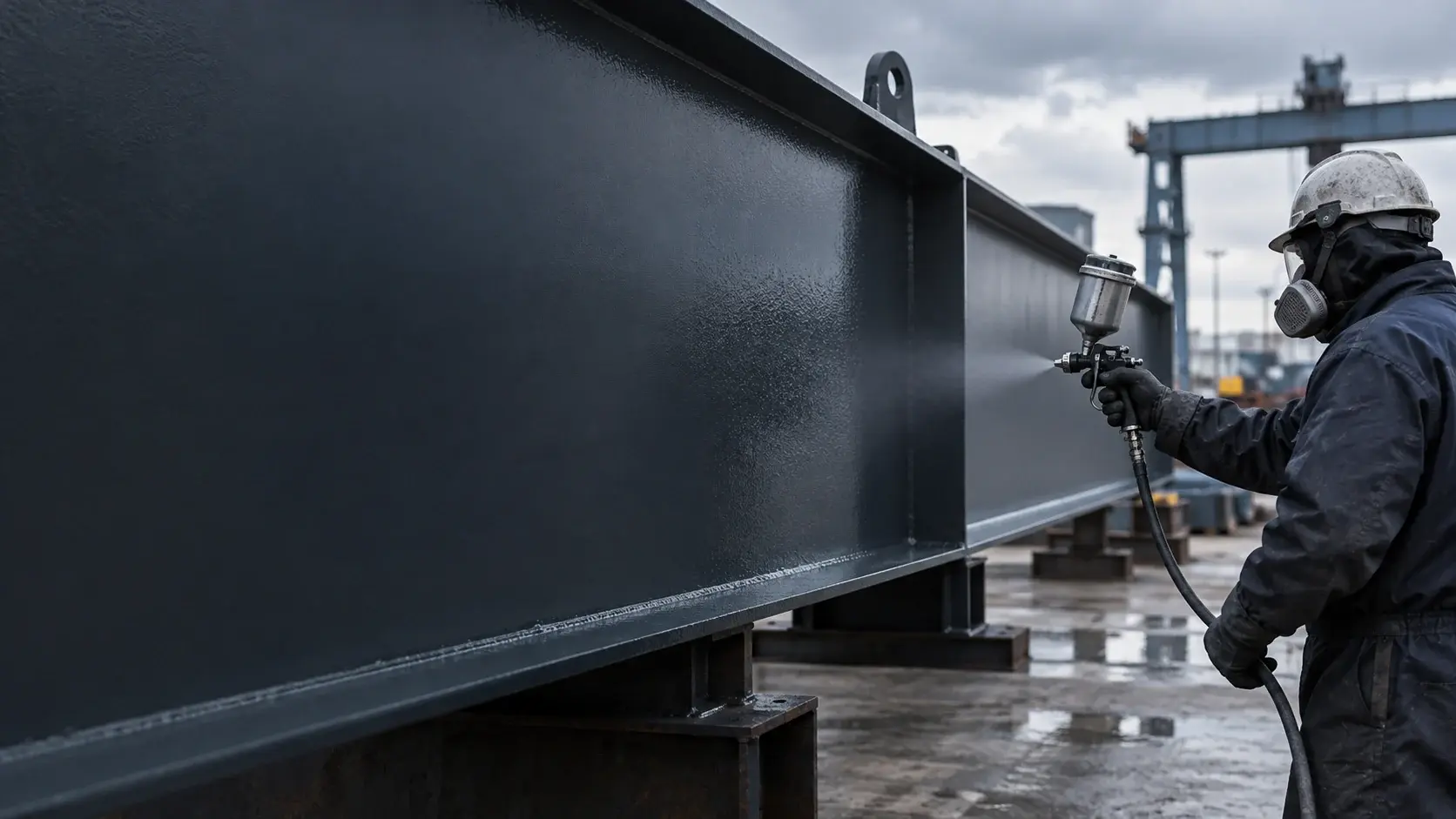
Coating steel components and industrial equipment using an agreed application procedure.
Ready-to-use paint or coating
A one-component material for metal structures and reinforced concrete. According to the presentation, a separate priming step is not required.
About the material
The presentation describes the primer-enamel as a styrene-acrylic copolymer formulation containing pigments and fillers. It is intended for structures and equipment in temperate and cold climates.
Material selection and the application process depend on the substrate, previous coats and service conditions. Request the current TU specification and instructions before use.
Purpose
The list is based on the AKRYL presentation. Suitability for a specific project is confirmed through technical selection.
Coating steel components and industrial equipment using an agreed application procedure.
The presentation lists use on reinforced concrete structures; substrate preparation needs to be clarified.
Applications in temperate and cold climate zones, in accordance with the material's intended use.
Specifications
Values are taken from the company presentation. Before ordering, check them against the current TU specification and the supplied material's quality documentation.
| Material type | One-component primer-enamel |
|---|---|
| Non-volatile content by mass | At least 60 % |
| Coating adhesion | No more than 2 points |
| Resistance to static water exposure at 20 ± 2 °C | At least 24 h |
| Approximate consumption for a single coat | 80-250 g/m² |
| Film flexibility on bending | No more than 3 mm |
| Resistance to 3 % NaCl solution at 20 ± 2 °C | At least 8 h |
| Flow time, VZ-246(4) cup, at 20 ± 0.5 °C | At least 40 s |
| Guaranteed storage period stated by the manufacturer | 12 months from manufacture, provided storage conditions are met |
These are individual material specifications, not test results for the complete system. Requirements and test methods must be checked against current technical documentation.
Preparation
Remove contamination and ensure the substrate is dry. Confirm the full preparation procedure in the current document.
Stir the one-component material until homogeneous before use; do not add a hardener.
The method, viscosity, consumption and drying conditions are established for the project using the current instructions.
| Preparation | Stir until homogeneous. No hardener is required. |
|---|---|
| Application methods | Air spray, airless spray, flow coating, dipping or brush. |
| Main application temperature range | From +5 to +30 °C. Agree any lower-temperature application with the technologist in advance. |
| Drying | Air drying; confirm the time and readiness criteria for the next coat using the current application sheet. |
| Storage | In tightly closed containers, protected from moisture and direct sunlight. |
| Precautions | Ensure thorough ventilation during and after application, wear protective gloves and keep away from fire. Select full safety measures and protective equipment using the material's safety data sheet. |
This information is taken from the manufacturer's materials and does not replace the current application instructions. Request them for the selected material and project before application.
Theoretical consumption is given for the specified coating thickness. Actual consumption depends on application methods and conditions, roughness, object geometry and process losses.
Specify the structure type, substrate condition, service conditions, area and preferred application method. We will clarify technical documents and supply terms.
Questions
No. The presentation describes this material as a one-component primer-enamel.
The presentation states that a separate priming step is not required. Substrate cleaning and preparation requirements still apply.
No. The conclusion covers a different, four-material 2K system.
The presentation lists air spray, airless spray, flow coating, dipping and brush application.
The main range in the presentation is +5 to +30 °C. Lower-temperature application is described subject to conditions; request the current instructions before using it that way.
The presentation names xylene, acetone and R4. Check compatibility, quantity and working viscosity against the current instructions.
Two presentation slides give different values: 1 and 3 h at 20 °C. A specific drying time cannot be stated until the manufacturer clarifies this.
Catalogue