
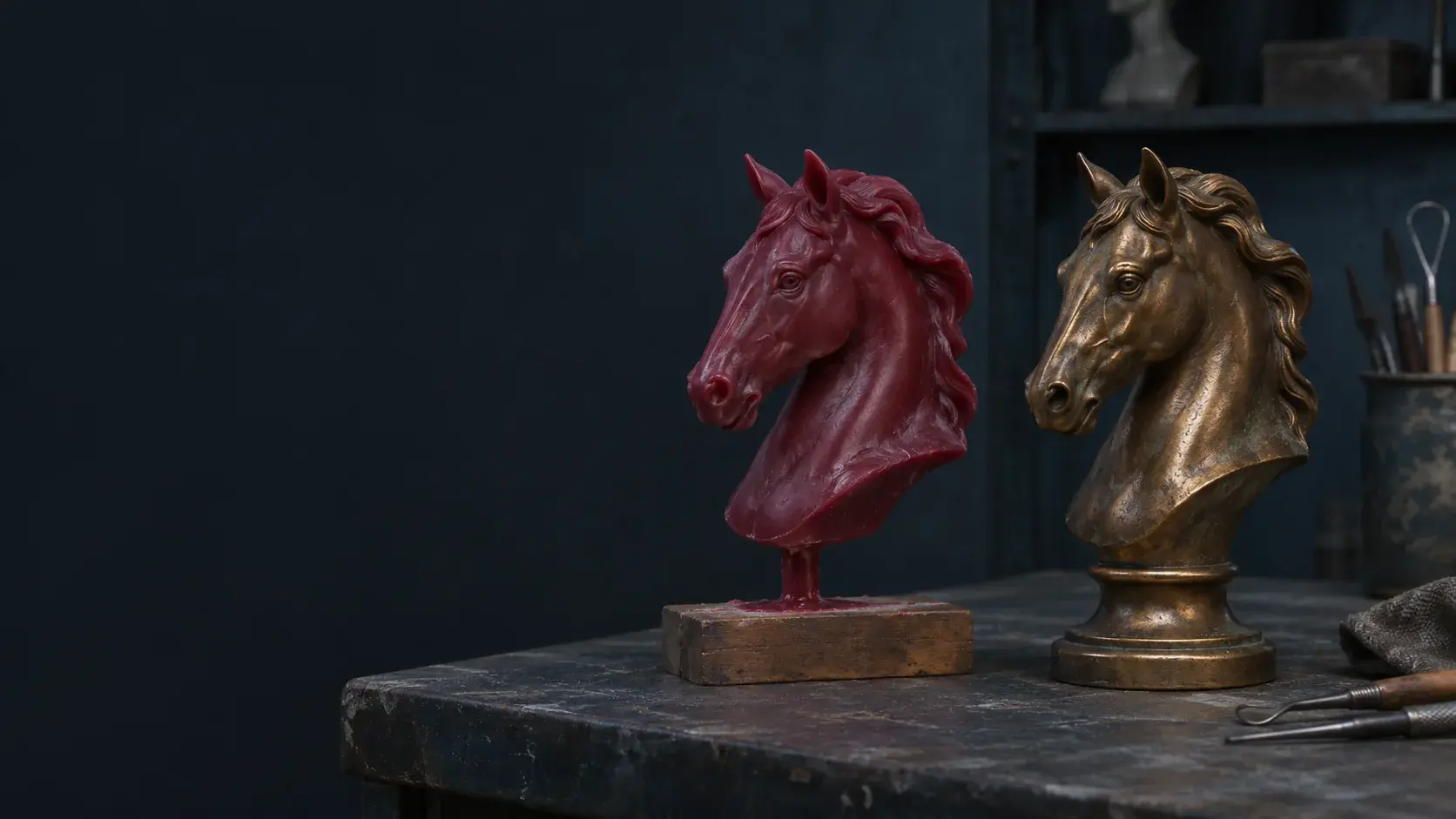
Illustration of a wax pattern and a finished bronze sculpture

For sculptors and art foundries

Hydrocarbon resins in pattern waxes for sculpture casting

If you blend your own wax for bronze casting, two questions matter: does the pattern capture fine detail, and what remains in the shell after the wax is removed? Here is how to decide whether Piroplast-2K is worth testing in your blend.

Cast stonePattern waxTrial casting
MaterialGround calciteA filler for cast stone
PatternWax compoundFor bronze casting
ProductPiroplast-2KHydrocarbon resin
EvaluationTrial sampleIn your own formulation

Role in the formulation

Where does the resin go?

In cast stone, the binder remains in the finished piece. In lost-wax bronze casting, the pattern material is removed from the mould before the metal is poured.

Piroplast-2K hydrocarbon resin
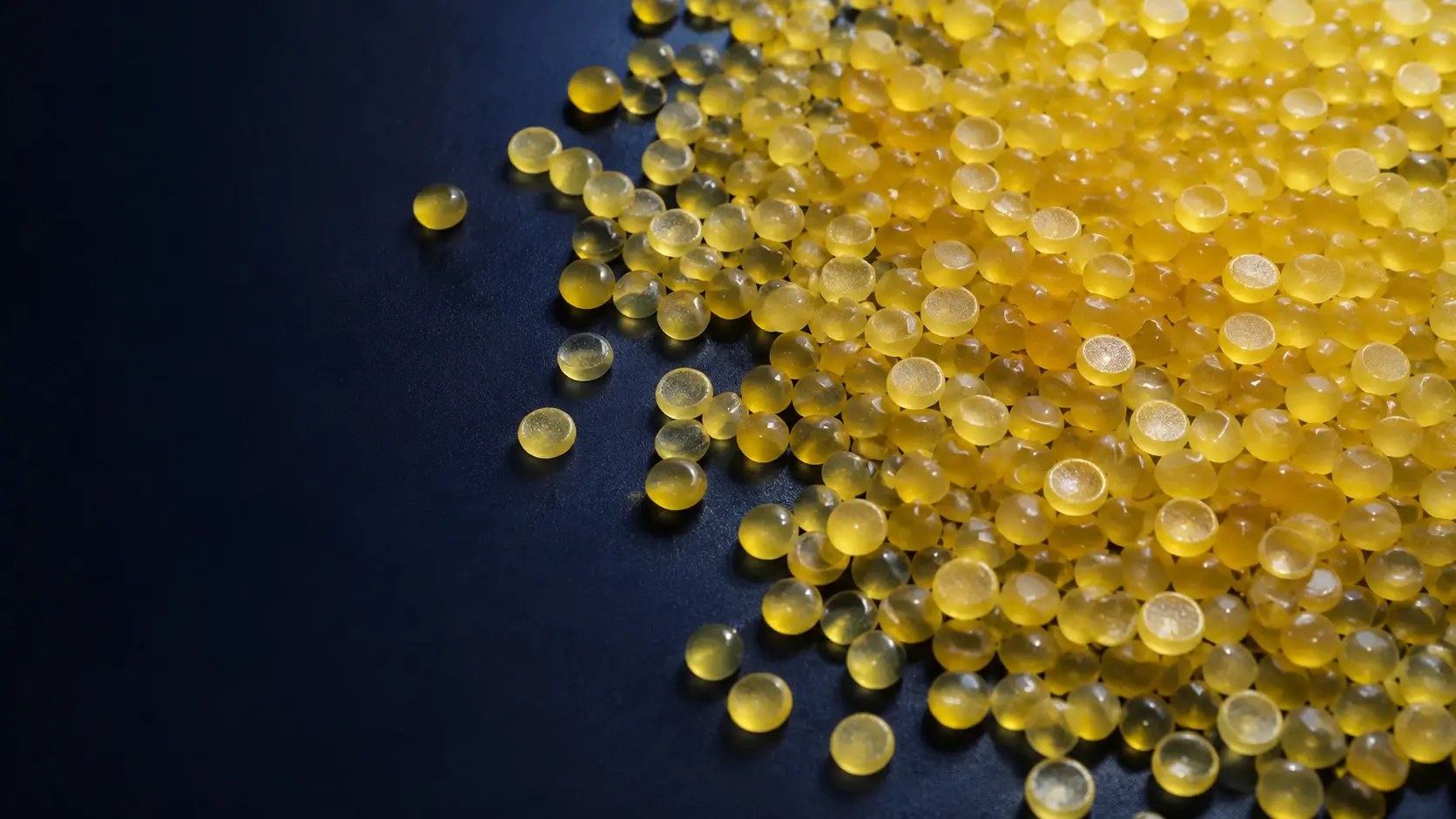
Illustration of resin feedstock. Refer to the batch certificate for colour and measured properties.

What to tell us first

You do not need to disclose the full recipe. Describe the material, the process and the result you want.

  • What are you making: a sculpture, a relief or a sacrificial pattern?
  • Which binder or pattern wax do you use?
  • When does the defect appear: during pouring, cooling or removal?
  • Does the piece have particular requirements for clarity, colour or odour?

Your process

Two routes to a cast sculpture

Choose the process that matches your workshop. Each calls for a different conversation about the material.

01 · Cast stone

I cast a mix filled with ground calcite

Name the resin and hardener. Will the piece be painted, light-coloured or transparent? Piroplast-2K is not offered as a ready-to-use clear casting binder.

Discuss: the intended function of an additive and any colour limits.
02 · Cast bronze

I make expendable wax patterns

If you blend wax in-house, describe the base and the behaviour of the pattern. For example, a thin edge may curl as it cools. If you use a commercial wax, start with its grade name.

Check: detail reproduction, dimensions and residue after pattern removal.

Selection guide

When is a hydrocarbon resin worth testing?

Selection depends on the base material and the requirements for the pattern. These differ from one process to the next.

On a narrow screen, scroll the table sideways. Keyboard users can focus it with Tab and scroll with the arrow keys.

Your processRole of the materialBefore a trial
In-house wax and resin blendResin is part of the sacrificial pattern. Compatibility with the wax base matters.Identify the permitted resin type and agree on a reference blend.
Commercial pattern waxThe wax manufacturer has already selected the ingredients.Record the grade and the defect. Discuss formulation changes with the wax manufacturer.
Cast stone filled with ground calciteThe mineral powder stays in the piece with the cured binder.Do not substitute Piroplast-2K for the polyester binder. An additive needs a defined purpose and a separate trial.
An aliphatic resin is specifiedThe specification defines the permitted resin chemistry.If only an aliphatic resin is permitted, we do not offer aromatic C9 as a direct substitute.

For an exposed light-coloured surface, assess the shade separately. For an expendable pattern, agree on the acceptable ash residue.

Trial programme

How to compare a candidate with your usual pattern wax

Choose one pattern with a feature typical of your work: a thin edge, shallow lettering or fine relief.

01

Keep a reference

Retain a sample of your usual blend and describe the defect you want to address.

02

Check the raw materials

Record the wax type, current resin properties and ash requirements. Softening point alone is insufficient for selection.

03

Compare the patterns

Under the same processing conditions, compare blend uniformity, reproduction of fine detail and dimensions after cooling.

04

Assess residue

Check how the pattern material leaves the shell. Compare ash results obtained using the same test method.

Pattern materials

Research and documentation

In a VIAM study researchers examined how the resin-to-paraffin ratio affects the viscosity of a pattern compound. A separate institute patent gives an example using an aliphatic resin. This explains the component’s role but does not establish suitability of any particular Piroplast-2K grade.

A related historical example appears in inventor’s certificate SU831343: Piroplast-2 was described in an expendable pattern composition. Its properties and dosage cannot be transferred to today’s Piroplast-2K without testing.

To discuss a sample, tell us the base material, your current grade and the requirement you want to test. Ask for the technical data sheet and a certificate for the selected batch. Quality documents · Delivery terms · Contact the manufacturer.

Working with sand moulds and cores? See resins for foundry moulds and moulding mixtures.

FAQ

Questions from workshops

What to clarify before requesting a sample.

Can I pour Piroplast-2K in place of polyester resin?

We do not offer it as a ready-made substitute for this type of casting. First define its intended role and assess compatibility with the working formulation.

Is the resin suitable for white cultured marble?

The resin has its own colour and characteristic odour. Tell us before sample selection if the surface must remain white or transparent.

What should I tell you if I buy ready-made pattern wax?

Give the wax grade and describe the problem you see. This helps determine whether a formulation discussion with the wax producer would be useful.

Technical enquiries

Tell us about your casting

For example: “We make wax patterns for cast bronze reliefs. A thin edge curls as the pattern cools. What information would you need to evaluate a resin?”

Discuss your application
For the first conversationThe part, the blend you use and the result you want to change.